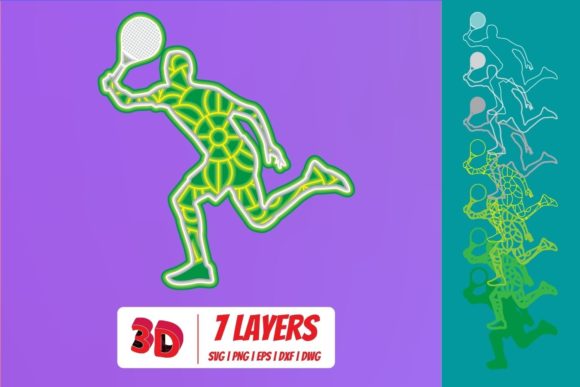
3D Layered Tennis Player 2 SVG Cut File Review
As a designer who has spent years navigating the fine line between digital downloads and physical stitched products, I approach every new asset with a critical eye. The market is flooded with generic graphics, but finding a 3D Layered Tennis Player 2 SVG Cut File that actually translates well to real-world applications requires a deeper look. When I first opened the zipped folder containing the svg, dxf, png, and eps formats, my immediate goal was to determine if this design could hold up under the scrutiny of a professional embroidery project or a high-end handmade product.
First Impressions: Visual Depth and Design Intent
The moment I imported the file into my workflow, the visual personality of the tennis player became apparent. This is not just a flat silhouette; it is constructed as a 3D SVG, meaning the layers are designed to create depth when separated by foam or stacked materials. For an embroidery context, this layered structure suggests a unique opportunity for an applique design where each layer can be stitched down individually to build dimension. The mood is energetic and sporty, capturing the dynamic motion of a player mid-swing. However, the true test lies in how these shapes interact with fabric texture and thread tension.
In the realm of Shapes and vector art, clarity is king. The lines in the 3D Layered Tennis Player 2 SVG Cut File are crisp, which is essential when converting a digital cut file into a machine embroidery design. If you plan to use this for custom apparel, the distinct separation of layers allows for creative color blocking. Imagine using a contrasting thread for the inner layers to make the figure pop against a sweatshirt background. This kind of visual hierarchy is what separates a basic craft fair item from a boutique-quality finished product.
A Real-World Scenario: The Custom Sweatshirt Project
To truly evaluate the utility of this asset, let’s walk through a practical scenario. Suppose you are an Etsy seller preparing a holiday order for a local tennis coach who wants personalized gifts for her team. You decide to create custom sweatshirts featuring the 3D Layered Tennis Player 2 SVG Cut File. The challenge here is translating the digital layers into a cohesive embroidered patch or direct-to-garment application.
If you were to treat this purely as a cut file for vinyl, the result would be flat. But by reimagining it as an embroidery project, you can utilize satin stitch for the outlines of each layer and fill stitch for the larger body parts. The layered nature means you could potentially use different fabric scraps for each tier, creating a rich, textured look. On a heavy cotton sweatshirt, the density of the stitching needs to be carefully managed. Too much stitch density on a stretchy fabric like fleece can cause puckering, ruining the smooth curve of the player's arm. In this case, the 3D Layered Tennis Player 2 SVG Cut File serves as a blueprint for a multi-step process that adds significant value to the garment.
Customers buying these items are looking for quality they can feel. A well-executed version of this design on a tote bag or cap signals professionalism. The depth created by the layers makes the image stand out even from a distance, which is crucial for team gear worn at matches. It transforms a simple graphic into a statement piece that enhances brand consistency for small shop merchandise.
Navigating Fabric Challenges and Hoop Limitations
While the design is versatile, it is not without its limitations. As an experienced decorator, I always advise testing any new embroidery file on scrap fabric first. The 3D Layered Tennis Player 2 SVG Cut File contains detailed corners and curved edges that can be tricky on thin or highly textured fabrics. If you attempt this on a lightweight tea towel or a sheer baby item, the multiple layers might overwhelm the material, causing it to distort under the hoop pressure.
Furthermore, consider the hoop size. Because this is a layered design intended to show depth, it likely requires a larger working area than a simple icon. Trying to cram all the layers into a small 4x4 hoop could compromise the detail, making the player look blocky rather than dynamic. For projects like caps or hats, where the surface is curved, the rigid nature of some layered appliques can lead to bubbling. In these instances, you might need to simplify the design or adjust the stabilizer strategy significantly. Using a tear-away stabilizer for light fabrics versus a cut-away for heavier garments will drastically change the final outcome.
Dark fabrics also present a specific challenge. Without proper backing or a dense fill stitch, the details of the tennis player might get lost against a black background. Always check your thread colors against the fabric before committing to a full run. A quick test in black and white mockups can save hours of wasted thread and time.
Strategic Value for Craft Businesses and Digital Sellers
For the digital product seller or the owner of a craft business, the versatility of the included formats—svg, dxf, png, and eps—is a major advantage. While the primary focus here is embroidery, having these files compatible with Cricut Design Space and Silhouette Designer Edition expands your potential customer base. You can offer the same design as a printable mockup for t-shirt transfers, a vinyl decal for water bottles, or a die-cut element for scrapbooking.
However, when selling the finished product, the perceived value hinges on execution. A poorly stitched version of the 3D Layered Tennis Player 2 SVG Cut File can damage your reputation. Conversely, a flawless personalized gift that showcases the intricate layering can command a higher price point. This design fits perfectly into categories like holiday embroidery, sports-themed nursery decor, or commemorative patches for local clubs. It appeals to hobbyists who want to elevate their work and commercial decorators who need reliable design assets.
Practical Designer Notes for Success
Before integrating this design into your next collection, keep these practical tips in mind:
- Test on Scrap Fabric: Never skip the test run. Check how the layers sit on your specific fabric choice.
- Check Thread Contrast: Ensure the thread colors provide enough definition between the layers so the 3D effect is visible.
- Review Stitch Density: Adjust your settings to prevent puckering, especially on stretchy materials like jerseys or sweatshirts.
- Confirm Licensing: Verify the terms for commercial use. Just because you have the file does not automatically mean you can sell the finished goods without restrictions.
- Use Proper Stabilizer: A strong foundation is key for layered designs to maintain their shape after washing.
- Inspect Small Details: Zoom in on the digital file to ensure no tiny elements will get lost during the stitching process.
Ultimately, the 3D Layered Tennis Player 2 SVG Cut File is a powerful tool for those willing to put in the extra effort to adapt it for embroidery. It offers a fresh take on sports imagery that moves beyond flat decals. By understanding its strengths and limitations, you can create custom apparel and handmade products that stand out in a crowded market. Whether you are making a single personalized gift or launching a line of team merchandise, this design provides the structural integrity needed for a professional finish.