3D Summer SVG: A Designer's Practical Review
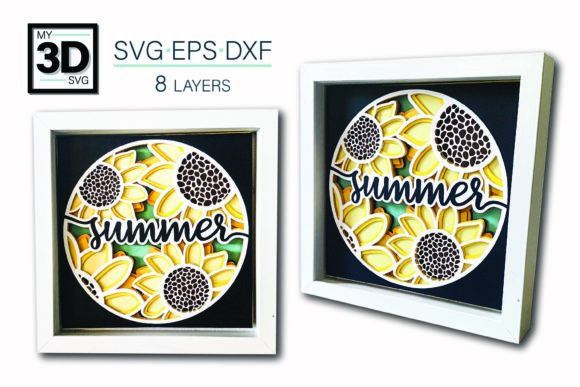
As a designer who has spent years navigating the intersection of digital assets and physical craftsmanship, I approach every new file with a critical eye. The market is flooded with generic patterns, but finding a design that translates well from a screen to a tangible product requires careful evaluation. Today, I am reviewing the 3D Summer SVG, a file marketed specifically for its layered depth and versatility in summer decorations. While the product description highlights its use as an 8-layer design made with standard 8.5x11 cardstock for Shadow Boxes, my focus here is on how this aesthetic translates into the world of embroidery, custom apparel, and handmade goods.
First Impressions: Visual Depth and Seasonal Mood
When I first opened the 3D Summer SVG file, the immediate takeaway was the intention behind the layering. The design leverages an 8-layer structure to create a sense of volume and shadow, which is a hallmark of high-end paper crafting. For an embroidery designer, this presents an interesting challenge and opportunity. The visual personality is undeniably summery, evoking warmth and playfulness through its shape and layout. However, translating "3D" from flat cardstock to thread requires a shift in thinking. In paper crafts, depth is physical; in embroidery, depth is achieved through stitch density, thread texture, and color gradients.
The mood created by this design is bright and celebratory, making it a natural fit for seasonal collections. It feels like a design meant to pop against a background, whether that be a crisp white tote bag or a pastel nursery wall hanging. The detail level is moderate, avoiding the microscopic intricacies that often fail during digitization, yet it retains enough complexity to look professional once stitched. This balance suggests that the 3D Summer SVG could serve as a strong centerpiece for a boutique product line without overwhelming the machine or the fabric.
Translating Layers to Stitch: A Real-World Scenario
To truly understand the potential of this asset, let's imagine a real-life project: creating a limited edition collection of embroidered tote bags for a local craft fair. Imagine a customer walking up to your booth looking for a personalized gift for a beach party. They want something unique, not just a flat print. If you were to adapt the 3D Summer SVG for this tote bag design, you would need to consider how those eight layers interact with fill stitch and satin stitch.
In a paper Shadow Box, the layers are physically separated by foam tape. In embroidery, we simulate this by using different thread colors and varying the stitch direction. For example, the base layers of the design could be rendered in a lighter tone with a looser running stitch to suggest distance, while the foreground elements use a dense fill stitch in a vibrant hue to bring them forward. The result would be a textured, tactile piece that invites touch. Customers often react positively to this kind of dimensionality because it signals quality and effort. It elevates a simple canvas bag into a premium handmade product that justifies a higher price point.
Similarly, consider applying this concept to sweatshirt embroidery. A large back print utilizing the layered logic of the 3D Summer SVG could create a striking statement piece. The key here is ensuring that the design does not become too stiff. Heavy stitching on a soft garment can ruin the drape. Therefore, when adapting this digital embroidery file, one must carefully manage the stitch density to maintain the flexibility of the fabric while preserving the visual impact of the 3D effect.
Navigating Fabric Challenges and Technical Limitations
While the design holds promise, there are specific scenarios where caution is required. Not all fabrics play nicely with complex, multi-layered concepts. For instance, if you attempt to stitch this on thin, stretchy fabric like jersey knit without the proper stabilizer, the tension from the multiple layers could cause puckering or distortion. The design might look great on a mockup, but on a real custom apparel item, it could warp the material.
Textured fabrics also pose a risk. On a heavy linen or a boucle throw pillow cover, the fine details of the inner layers might get lost in the weave of the fabric. In such cases, simplifying the design or increasing the scale is essential. Additionally, dark fabrics require careful consideration of thread colors. A design that relies on subtle shading for its 3D effect might disappear entirely on a black background unless you use a high-contrast underlay or a very bright top thread. Always test the design on scrap fabric first to see how the light interacts with the stitches.
Another area of concern is small hoop sizes. The 3D Summer SVG is described as an 8-layer design, which implies a certain footprint. Trying to cram this into a 4x4 inch hoop for a cap or a small patch could compromise the integrity of the layers. The intricate corners and overlapping elements might merge together, losing the distinct separation that defines the style. For items like caps or baby clothes, where space is limited, you may need to deconstruct the design, using only the most prominent layers rather than attempting the full 8-layer stack.
Strategic Use for Craft Businesses and Etsy Sellers
For the Etsy seller or small shop owner, the value of a design lies in its ability to drive engagement and trust. A well-executed version of the 3D Summer SVG can significantly enhance your brand consistency. When customers see a cohesive, high-quality aesthetic across your listings, they perceive your business as more professional. This design, with its clear summer theme, fits perfectly into holiday embroidery collections or seasonal merchandise drops.
However, before committing to a full production run, I strongly advise creating printable mockups to visualize the final outcome. Compare how the design looks on light versus dark backgrounds. Test it in black and white to ensure the contrast works even without color. These steps are crucial for managing customer expectations. Nothing damages a craft business reputation faster than a finished product that looks nothing like the listing photo.
Furthermore, always confirm the licensing terms before selling finished items or digital products. While the product description mentions the creator is "always happy to" help, you must verify if the license allows for commercial use of the embroidery file itself or just the finished goods. Some designers allow you to sell the stitched item but prohibit reselling the digitized file. Clarity here protects your intellectual property and ensures you remain compliant with industry standards.
Final Verdict: A Versatile Asset with Caveats
The 3D Summer SVG is a compelling design asset that offers a fresh take on seasonal motifs. Its 8-layer structure provides a unique opportunity to experiment with depth and texture in embroidery, moving beyond flat, single-color applications. Whether used for personalized gifts, holiday embroidery projects, or commercial embroidery lines, it has the potential to stand out in a crowded market.
However, success depends on the designer's ability to adapt the concept to the medium. It is not a plug-and-play solution for every fabric or hoop size. By testing on scrap fabric, choosing appropriate thread colors, and respecting the limitations of stitch density, you can transform this digital file into a stunning physical reality. For the experienced maker willing to put in the technical work, this design offers a rewarding path to creating memorable, high-value products that capture the essence of summer.